A collection of serious and less serious non-academic writings.
Overview
- Reflections: „You worry too much“ (2024)
Think piece on my personal experiences with racism and (structural) gaslighting. Published on this blog. - Who I want to be (2023)
If I were a deity, this is how I’d imagine myself to be. Published in an online forum. - Protest Speech (translation) (2020)
Speech held at the BlackLivesMatter demonstration in Halle, Germany. - Game invitation (2023)
Call to get the online friend group together, with a survey as an incentive. Written for a private group chat. - BIPoC student group invitation (2020)
Call for students of color to join our freshly formed student organization, the first of it’s kind. Shared on social media and a listserv. - Birthday wishes (no date)
My favorite ways of gratulating people on their birthdays, usually through handwritten notes. - Flyers (2023, 2024)
Flyers I have created using Canva and Procreate - Concert report (translation) (2018)
1. Reflections: „You worry too much“ (2024)
There is a fine line between soothing someone’s worries and gaslighting them.
Growing up in a small, predominantly white city in Germany, racism was thrown at me left and right. (Together with misogyny, misogynoir, fat phobia, xenophobia, and later on transphobia and transmisandry, but let’s leave that aside for now.)
Any attempt to voice my pain over being, yet again, called a Neger, being yet again told I am “burnt”, or that my skin has the color of shit, that I *am* shit, that my hair is like pubic hair, that I should go back to where I came from (even though I was born just 15 minutes away) or to voice my general feeling of not being safe when walking in the streets – was “soothed” away by telling me that I shouldn’t take it personally, that I should “toughen up” and „get a thicker skin”. The others are just stupid, they are just assholes.
Maybe.
But was I not just a little kid, barely 2 digits old, that was just compared to human excrements?
Didn’t I deserve some compassion?
People close to me, sometimes even best friends, would throw the most degrading remarks at me, while otherwise being kind and treating me like every other person. They would say “Nothing against you and not to offend you, but Neger are ….” as if that magically excluded me from the category of a Neger, as if all of a sudden it no longer made me black. As if just because they said this, there was nothing else for me to worry about. As if all of a sudden I was safe.
But “Nothing against you” wasn’t the protective spell they made it out to be. One person telling me they liked my skin didn’t protect me from the four others that would follow, that not only told me that they didn’t like my skin, but that also made it clear that in their eyes, my skin always made me less than. Less than a person, less than someone worthy of respect – less than a human.
Already when I was very young I had this gut feeling that these were the workings of racism. But while I was growing up, racism, in Germany, was considered something only (Neo)Nazis “do”; something expressed in overt acts of verbal and physical violence. I never got beaten up, so I never experienced racism, or so the logic goes. The nice lady from next door can’t possibly be racist, the supposed “compliments” can’t possibly be racist and ohhh, was I dismissed and disciplined for even implying it.
I couldn’t call out the injustice I was exposed to over and over because ultimately, in the eyes of most – there simply was none. Instead, the responsibility was on me, a little child, to toughen up in moments that had the potential to quickly escalate into “actual” violence.
Just ignore what they’re saying.
Don’t let it get to you.
Get a thick skin.
Read: You are at fault if you let it affect you.
So I silenced myself. I shut up. I always knew better than to talk back and stand up for myself when I was confronted with racism. Now I stopped voicing my emotions about it altogether. I stopped letting people know about my pain and anger. I dealt with it the best that I could and my body still carries the scars of countless internal battles fought.
I swallowed so much bullshit that was thrown at me, to the point where it became part of myself. I internalised racism, believed I actually am less than. In part, it was „necessary“ in order to protect myself: I needed to know and understand how I was being perceived in order to navigate the world. Act properly, don’t give people a reason to be upset, don’t give people a reason to do or say something „truly racist.“
In other words, I had to worry, had to always be on the lookout in order to keep me safe – from anybody, basically. The person in all black, who could be a goth, a neo nazi or a member of the antifa – all could be dangerous. The police officer, the doctor, the administration worker – all could be dangerous. The teacher, the coach, the friend, the family member – all could be dangerous.
For people from all of these groups have been dangerous. They all did harmed me with racist remarks and actions in one way or another. And people from all of these groups continue to pose this threat. The issue wasn’t just about me being sensitive or them being idiots. The actual problem was a society infused with anti-black racism and white supremacy. Less openly violent, but structural and covert
But this took me a loooong time to understand.
I didn’t grow up with a black person that could explain to me what on earth was going on. And the white people didn’t strengthen me in my suspicion that I am subject to (systematic) racism. No one even told me that my pain, my worries, my hurt, and my general distrust were valid. My pain didn’t matter and, what’s probably worse, no one bothered to actually listen. For that always runs the risk of making them feel uncomfortable. And their discomfort is more important than what I experience, right? It’s always harder to deal with the accusation of racism than it is for the person having to deal with it, right?
So best to just hush and silence the child. Explain the worries away in the simplest way possible. The others are just idiots. The child is smart enough to get that and if not, life will teach it eventually. Right?
To the people thinking this I want to say: Wrong. Just wrong.
It’s not just “some idiots” behaving inappropriately. And it’s not just some other people being „too sensitive”. It is a whole social structure that is inherently racist, anti-Black, with gaslighting as the central engine for its upholding and perpetuation.
Denying that the oppressive and discriminating experiences of marginalized individuals stem from structures of oppression (white supremacy and anti-black racism in this case) is a form of structural gaslighting. It conceptually severs individual instances of oppression, harm and injustice from broader patterns of discrimination. It places the “guilt” on the level of individuals only, and obscures the overarching structures that made their behavior possible in the first place.
So attempts to “sooth my worries” about the racism I have experienced, am experiencing, and am afraid to experience in the future, can be understood as instances of structural gaslighting. And as with “individual” or „personal“ gaslighting (in contrast to structural gaslighting), the effect is that the person being gaslit begins to doubt their ability to properly perceive and make sense of their experiences. Was it really racism or am I reading too much into it? Did they really say that or did I misunderstand them? Did they do something bad or am I in the wrong for feeling like they did?
I have 27 years of experience with racism. I also have 27 years of experience with a structure that taught me not to notice it. Of course there is always the possibility that I simply „got it wrong”. But I don’t think that the people who never, not once, were on the negative receiving end of racism (for some of them surely received and enjoyed its „privileges“ and „benefits“) are best qualified to assess whether I’m in the wrong, or are in a position to tell me “not to worry”. That did they know?
Earlier I said that I told myself: “Act properly, don’t give someone a reason to be upset, don’t give them a reason to do or say something „truly racist.” Exchange “racist” here with “misogynistic”, “transphobic”, “fat phobic”, “transmisandrist” – and you can see that I had a lot to worry about.
So unless you have a deeper insight into who I am or what I have experienced, unless you have a proper grasp on structural problems and systems of oppression – don’t just tell me not to worry. Don’t gaslight me.
And most importantly: Don’t tell me not to worry when what you really want to say is: “I don’t want to deal with that/you”.
2. Who I want to be (2023)
A kind, gracious deity
That is the short answer. Now let’s unpack that.
What I do: being kind.
Some Gods are reckless, violent even. Omnipotence makes them uninterested in the needs and desires of their followers. Everyone is at their whim and the unpredictability of their actions installs fear in their followers. They know they can do what they want and they don’t hesitate to act out whatever crosses their mind – regardless of the consequences. They regard their followers as lackeys, mere pawns in their games. There is no ulterior motive in their actions: they take whatever they want and give if they feel like it. These Gods are being prayed to in order to calm their temper, the respect they receive is rooted in fear.
I regard these Gods as deeply bored; their actions are desperate attempts to create excitement in their lives. And they are ready to sacrifice anything and anyone to fulfill their desires.
Other Gods are gentle. They care for their followers, bestow blessings upon them. They appreciate every offer being made at the altar, no matter how big or small – they don’t throw a fit if something doesn’t live up to their standards, but rather value the effort being made. They are just as omnipotent as any other God, but they don’t regard this as an excuse for violence. These Gods are benevolent and only punish when justified and necessary. They have earned the respect of their followers for the care that they provide. Like a shepherd they watch over their flock and guide them towards what is best for them. They don’t take pride in being feared and the worship of their name is readily given as a sign of deep, genuine appreciation. And if you think about it, these gods are just as dependent on their followers as they are on them.
I want to be the latter.
How I move: with grace.
Some Gods are foolish tricksters. Some Gods have a short temper and throw a tantrum any chance they get. Some Gods hide behind disguises. Some Gods are strict to the extreme, imposing a tight, firm discipline on their followers. Some Gods are distant and absent. Some Gods behave no different than mortals and constantly mix and mingle with them.
And some Gods carry themselves with grace, radiating a noble aura. They effortlessly express good manners, are concerned with being perceived well. Their humor is witty and reflects their intelligence and class. They are bright, shining figures that attract their followers with their light. Yet, when they descend to interact with and bless the mortals, no one dares to touch them, for no one wants to disturb their divine balance. They naturally demand respect through the way they carry themselves.
I want to be the latter.
How I want to be treated: like a kind, gracious deity.
I want people to appreciate the things I give, yet never taking them for granted. For people know I have the power to take, to withhold, to punish – and they value my decision not to do so. I want to be made offers that mirror the generosity with which I give. I don’t want to be demanded or expected to perform. I want to be motivated.
I want to be a a kind, gracious deity. And I want the abundance I give to be poured back into me ☀️
3. Protest Speech (translation) (2020)
Hi!
I’m living here in Halle – grew up here – and I was lucky. Compared to Oury Jalloh, Breonna Taylor, and George Floyd, I was never a victim of police violence, especially not of the lethal kind. Obviously. I was also never beaten up by a bunch of racists. Thus, according to some people, I never experienced racism. These people think it is okay to say the N-word. „It’s nothing against you.“ These people also think it is okay to compare their summer tan to the color of my skin. Or they think it is okay to randomly touch my hair, if they are bold. These people also tell me unabashedly: „You’ve got pubic hair growing on your head.“ And when I then say to these people „Hey, I don’t like what you’re saying or doing, it hurts me and is racist.“ – Ooooohhhh. Every further conversation about the subject matter is being blocked off: „I didn’t mean it like that, you should know that, I only had good intentions, you’re way too sensitive, not everything is always about racism, and maybe you are the real racist.“
The usual defense mechanisms that I got familiar with already very early on. „Arguments“ that shift racists statements into the realm of the permissible, thus making it impossible to actually address and call out racism. No wonder, then, that Germany is asking again, or rather is still wondering: Does racism even exist in Germany?
For years we Black people have been channeling the courage to address the racism in Germany. And I just told you why our voices haven’t been heard. They cannot be heard as long as these ways of thinking and reasoning cannot be critically assessed and challenged. And before that, we cannot turn to the equally important question at the heart of the matter: How does racism show up in Germany? And ohhhh, don’t even get me started on the Kindergarten, school, university, the workplace, job hunt, the search for housing, the healthcare system, media.
Despite that, we are standing here today, protesting in the streets, expose ourselves to you, after another one of us had to die – in order for you to finally begin to listen to us.
The question is: Do you continue to listen even after this protest has ended? When #blacklivesmatter is no longer trending, will you still take a stance for us? When no Black person is around to hold you accountable, will you still be anti-racist? And if a Black person is around and falls victim to racism, will you still stand up for them? All of this is useless if you don’t use the momentum of this movement to embark on your own anti-racist, critical journey, and pick up as much as you can. Use the resources available to you, that are basically being thrown at you, and establish an anti-racist stance in your family, among your peers, at work, and in the public spaces you occupy. Don’t leave active anti-racism up to chance. And especially don’t just leave it up to us Black people. Make it your standard. Make it your indicator of quality.
If I had to chose between a life as someone subjected to racism or a couple of uncomfortable conversations? I’d choose the latter. But I don’t have that choice. Instead, I’m faced with both. You on the other hand, actually have a choice to critically challenge racism – or not. So far, you could close your eyes, not see color, not see any problems, „that’s none of my business, why would I care?“ So far, you could blissfully contribute to the perpetuation of racism, for you have been doubly blind: blind about racism and blind about your own complicity. These times are over.
We made the first step together with you today. Now it’s up to you to take the next.
4. Game Invitation (2023)
Firm believers, heathens, and fellow brain rots,
Prayers have been sent to the God King, and he shall answer.
After a long and tiring week of hard labor, what better way to usher in the weekend than with some custom games tonight?
I know folks have mixed feelings about our little community get-togethers. It can be sweaty, it can be toxic, but so much sweeter is the taste of praise for carrying and the fun in shit talking each other. If this isn’t motivation enough, I can actually provide another incentive to join: Throughout the day, whenever you can, please take 3 minutes to respond to this survey on player performance – to find out who is the true MVP. The results will be shared once we all -hopefully!- get together for Customs. The survey is anonymous, please only take it once and don’t be a dick and vote for yourself. Seriously.
I can’t wait for your responses and genuinely hope to see you guys tonight.
Noah
5. BIPoC Student Group invitation (2020)
Dear all,
the BIPoC Student Group is an official student-lead university group that aims to create a safer space for students that understand themselves as Black, Indigenous, or a Person of Color. We organise informal get-together as well as workshops, support each other, and work together to address racism at the university. You can follow us on Instagram and Facebook. If you understand yourself as a Person of Color and want to join us, please feel free to get in touch through our social media channels, via E-mail (bipoc.leipzig@gmail.com) or send me a direct message!
We are currently organising a festive get-together (online) on December 19th and would be thrilled to welcome you!
Feel free to share this with your BIPoC friends!
Love,
BIPoC Student Group
6. Birthday Wishes (no date)
Dear X,
Often, it is the birthday [boy/girl/child] that has to say “Thank you” a lot. But today I want to take a moment to thank you: thank you for the conversations we have and laughs we share; for the joy, the vulnerability, and the safety to authentically be ourselves. Thank you for allowing me to get to know you. Thank you for being the amazing person you are, thank you for your gentle kindness and witty humor. Thank you for persisting through everything life throws at you. Thank you for every smile so bright it competes with the sun. The world would be a dull place without you
The gifts you share are immeasurable.
So are you.
With all of my heart,
Noah
Congratulations, X!
You made it! Another successful trip around the sun! 940 million miles in only 365 days – no one could have don it better! A true legend!
For your next journey, I wish for you all the good and essential things: lots of fun, love, joy, happiness, strength, endurance, good health, and much success for all of your projects along the way.
I am grateful for every moment together with you on this voyage.
May the world celebrate you and all of your achievements today!
From the bottom of my heart,
Noah
6. Flyers (2023, 2024)

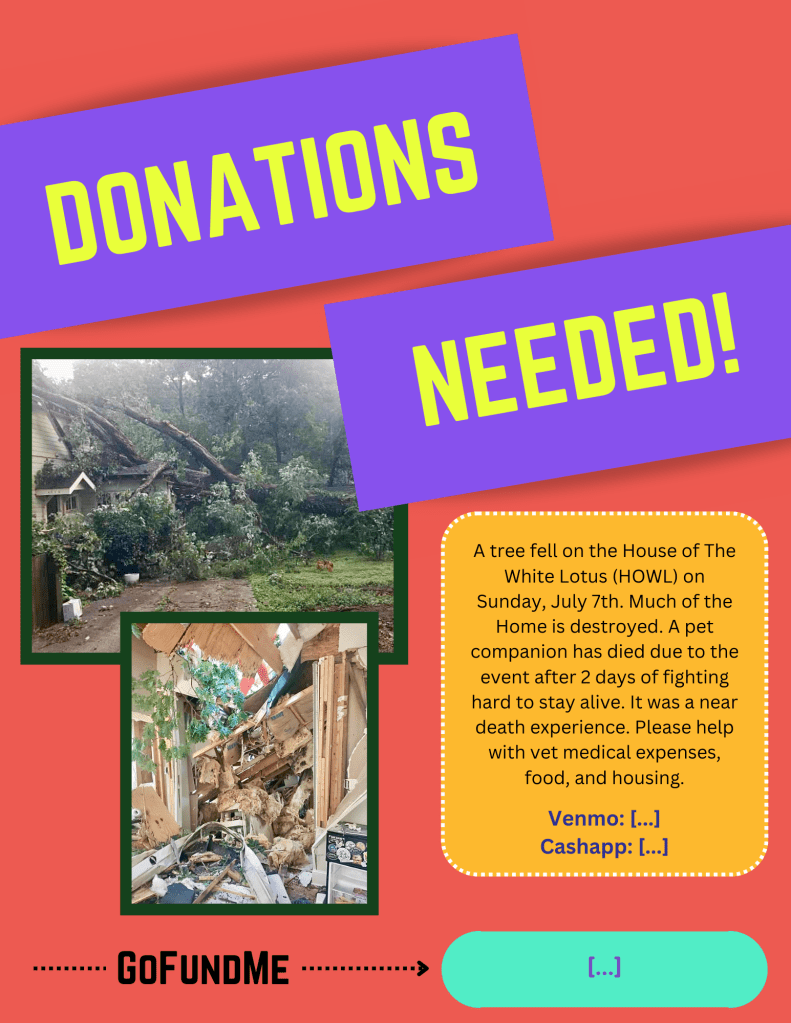
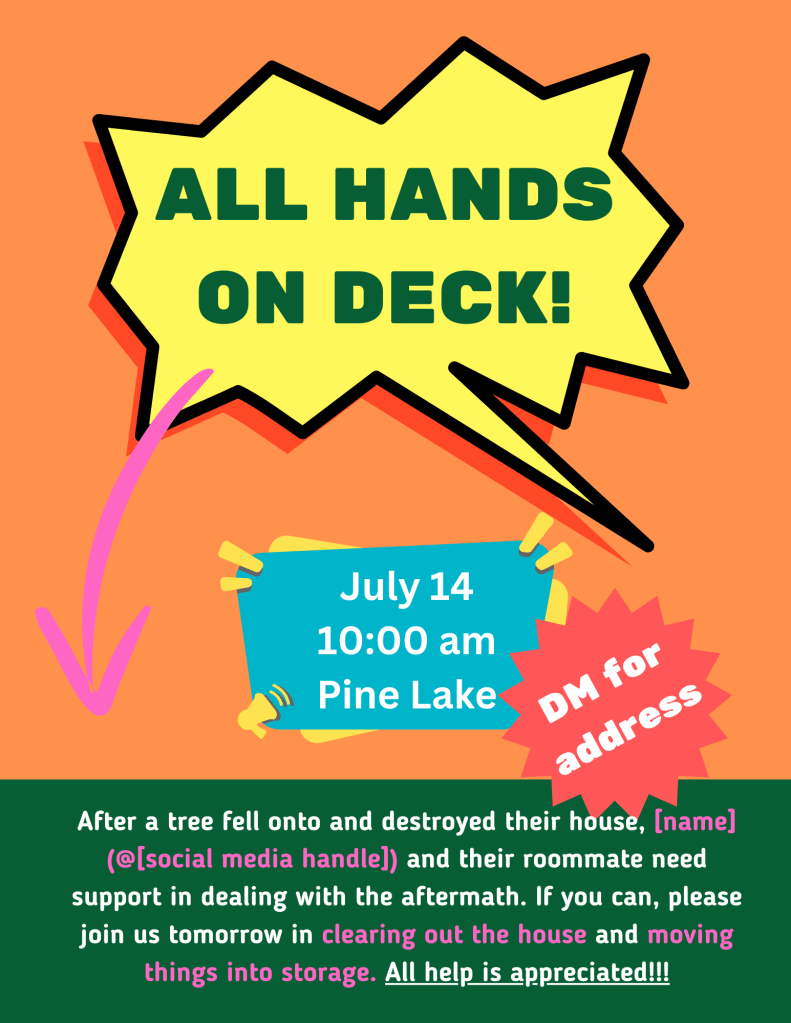

7. Concert Report (translation) (2018)
The orchestra stands up, mild applause. Four young men enter the stage. Three of them take a seat on the side, one climbs the podium. A deep breath, then the first movement of Bela Bartok’s Music for Strings, Percussion and Celesta begins to play.
The four conductors (Yu Sugimoto, Alexander Sinan Binder, Felix Mildenberger, Hossein Pishkar) are fellows of the Conductor Forum of the German Music Council. As part of a masterclass with John Carewe, they got the chance to collaborate with the Staatskapelle Halle in order to gain experience and hone their skills. On Sunday’s and Monday’s symphony concerts they would then get the chance to prove themselves in Händel Halle.
It was a challenge for both, conductors and orchestra. During the short period of preparation, the musicians constantly had to adjust themselves to the switching four directors: they had to become familiar with four distinct ways of beating time, had to get used to different musical styles, needed to pay attention to individual gestures, and even the different body heights mattered.
And the conductors? What were their biggest challenges? The sophisticated selection of pieces? Having to prove themselves as young conductors to an experienced orchestra?
To step in front of an unfamiliar orchestra is always a challenge, the fellows agree. In the panel „Audience meets Musicians“, following the concert and organized by Freunde der Staatskapelle Halle, the conductors got in touch with the audience and reported on their experience. If their young age causes any issues for the collaboration, one enthusiastic listener asks. Ideally, no. They all come together to make music. Origin, looks, gender, and also age are not of relevance here. But gaining practical experience is challenging nonetheless: „A conductor cannot work at home, alone in their room. Conductors make mistakes in front of 70 people“, Hossein Pishkar explains. But the Staatskapelle Halle met them halfway. They felt welcomed and appreciated and maestro John Carewe, too, praised the collaboration with and support from the orchestra. It paid off: while already being outstanding talents, the young conductors still notably improved, Carewe applauds. The musicians agreed.
The first half of the concert was dedicated to Bartok’s Music, which each of the movements being distributed among the conductors. Through their own distinct styles, each fellow highlighted different characteristics of the symphony. After the break, Yu Sugimoto presented an excerpt of Enrico Palomar’s Suite Goya Negro, inspired by Francisco de Goya’s gloomy „Black Paintings.“ The following switch couldn’t be more drastic: Alexander Sinan Binder invited the audience to dream with Claude Debussy’s Prélude à l’apres midi d’un faune. Conductors Felix Mildenberger and Hossein Pishkar closed the evening, sharing Igor Stravinskys Ballet Petrushka. As if the pieces in and of themselves weren’t already challenging enough, the conductors one-upped the task by switching in the middle of playing. Neither the orchestra nor the conductors had much time to adjust. But both came through and lived up to the task.
At the end, orchestra and conductors were rewarded with enthusiastic applause and standing ovations from the audience. Soon after, lively chatter filled the lounges of the Händel Halle, as people talked about which conductor they enjoyed the most and why.
With such a diversity of music and each conductor’s individual style, there was something for everybody.
 digital grad notes